Friday, July 14, 2006

Lithuania: End of the Brazauskas Era

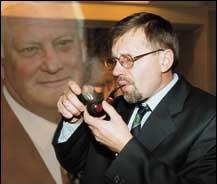
Last Tuesday, Lithuania's Parliament - the Seimas - voted for Gediminas Kirkilas as new Prime Minister. This effectively marks the end of the Brazauskas era in Lithuanian politics, and possibly also a new climate on how to run state affairs. The Seimas' decision to elect Kirkilas as new PM comes after period of political crisis and scandals, which in the end ousted Brazauskas from power at the end of May.

Lithuania's new Prime Minister, Kirkilas, is a 54-year old professional Social-Democratic politician with a background in the Communist party - as was also the case of Brazauskas. Until chosen PM, he served as Defence Minister. In contrast to his predecessor, Kirkilas is considered a soft-spoken and EU-oriented politician with good knowledge of English. Furthermore, he still lives with his family in an old Vilnius flat, whereas most high-level Lithuanian politicians have acquired stately mansions on relatively low wages. However, rumours about Kirkilas have already started to surface. Apparently, he has a BA from a party school, which would not have granted him a place at Vilnius university, where he earned his MA. Even though this is comparatively little to form even the nucleus of a scandal, one cannot but wonder what will come in a few months, when this has been disclosed even before coming into office.

The appointment of Kirkilas as Prime Minister ends a lengthy political crisis in the country. Since Brazauskas resignation on 31 May, president Lithuania was edging towards early elections. However, only the Conservative Party wanted early elections, as the other parties feared being cast out of parliament by popular vote. So what remained was to patch up what could be saved and nominate a new PM. Just two weeks before Kirkilas appointment, the president's nomination for the Premiership, Zigmantas Balcytis, was rejected by the Seimas. This was just another proof of the political turmoil that has hit Lithuania this Spring.

In May, first the Social Liberals and then the Labour Party left the Brazauskas-led coalition government, making the PM's position impossible. The Labour Party was also under police investigation on suspicion of having received economic backing from Russian interests and for imbestlement of EU-funds. The Labour Party chairman, Viktor Uspaskich, who had gone into exile in Russia, then resigned the leadership of his party. One of the key scandal factors was the fight for control over the Mazeikiu Nafta oil refinery, which strong Russian interests were keen on buying. Without going too much into details, the heritage Brazauskas left behind was far from enviable.

All the same, it is indisputable that Brazauskas has made great services to his country. As first secretary in the Lithuanian Communist Party, Brazauskas made the party break away from Moscow in support of the Lithuanian independence movement. He transformed the party into a modern Social-Democratic party and led it to victory in the 1992 parliamentary elections, once Lithuania's independence had been regained. In 1993, he became Lithuanian president, which he served as until 1998, when he chose not to run for reelection. He was succeeded by present president Valdas Adamkus. Despite the fact that Brazauskas had declared his retirement, he had difficulties to keep out of state affairs, and eventually returned to politics to become Prime Minister in 2001.

As Brazauskas has now left the Premiership, many would feel that his retirement is long overdue. In fact, he has been speaking of retirement over the past year, but of course did not realise that it would be forced upon him. Brazauskas great role in the history of Lithuania is arguably also what eventually caught up with him.

During Soviet reign, Lithuania was relatively spared from Russification. Therefore, it was a national communist party in Lithuania that had to come to terms with perestroika in the late 1980s. As the leadership and political class of Soviet Lithuania were almost exclusively of Lithuanian origin, the choice to support independence and reform the party was closer at hand than in most other Soviet republics. However, this also meant that the country's political élite remained almost intact. The consequence was that independent Lithuania inherited the soviet political culture to a greater extent than other republics. It is the effects of this culture that now eventually has caught up with Brazauskas and sealed his fate in Lithuanian politics. Hopefully, Lithuanians will remember him as the leader that brought independence to them, and not for the many scandals that engulfed his last years in office.

Thursday, July 13, 2006

Belarus Opposition Leader Sentenced to Jail

Today, a court in Minsk sentenced Belarus opposition leader and former presidential candidate Alyaksandr Kozulin to five and a half years' imprisonment, according to his wife. Kozulin was charged with organising protests in March against the reelection of Alyaksandr Lukashenka as president of Belarus. Lukashenka received some 83% of votes, which provoked widespread public protests and demonstrations.

The now sentenced Kozulin remains somewhat of an enigma to most analysts. In contrast to the other presidential candidate, Alyaksandr Milinkevich, Kozulin unexpectedly appeared as a candidate at a late stage of the runup to the March elections. His populism and provocative slandering of president Lukashenka was something new to Belarus politics. Many also wondered why he was allowed to attack the president on state TV, which is strictly controlled by the regime.

The initial assumption was that the regime had Kozulin run for the presidency in order to split the opposition. A more likely explanation is that he was Moscow's man. Accordingly, Russia would have used Kozulin to replace the increasingly difficult Lukashenka. Such assumptions are supported by an apparent power struggle within the regime in connection to the elections.

Thus, it seems that Lukashenka might just have averted being ousted from office by political forces allied with Moscow. His disappearance from the public after elections and the postponement of the presidential inauguration are further circumstantial evidence of a power struggle. That Belarus authorities now crack down so hard on Kozulin would serve as the final confirmation of the Russian connection. However, as is often the case with authoritarian regimes, one should be careful with taking rumours for granted. What is obvious is the increasing desperation of the Lukashenka regime to hold on to its grip on power.

Wednesday, July 12, 2006

US Pays Off Russia For Iran?

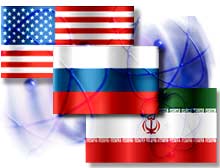
According to the New York Times, Washington is about to broker a deal with Moscow on Russian storage of US nuclear waste. In exchange, the White House expects the Kremlin to support its stance towards Iran on potential nuclear weapons' development. Thus, the US would bribe Russia to turn a blind eye on Washington's Iran policy.

The real issue at stake is, of course, Iran's plans to develop its nuclear capabilties. The Bush administration claims that Iran is trying to develop nuclear weapons, whereas Teheran argues that it is only exercising its right to develop nuclear energy. During the last year, this issue has become so heated that it on several occasions has become a concern for the UN Security Council. Therefore, as new of US-Russian negotiations on a bilateral nuclear deal broke last Saturday, speculations peaked how this would affect Iran.

So, why is Iran's nuclear affairs of concern to Moscow? Except Russia's seat on the Security Council and strategic concerns, the great reason is that Russia is Iran's biggest supplier of fuel, equipment, and expertise to the country's nuclear programme. As previously reported, Russia's nuclear industry is one of the few technically advanced sectors where Russia can still compete for shares on the international market with other technically developed states. The steady flow of incomes from nuclear supplies to Iran has been an indispensable and reliable factor for the survival of Russia's atomic sector.

If the prospects of a Russian-American nuclear deal would prove much more lucrative and stable to Moscow than continuing nuclear supplies to Iran, the US might stand a chance of turning Russia's position on Iran. This would be to pay off the Russians. However, it ignores that competing interests in Russia might complicate Moscow's ability to keep to such a deal. Still, the US has obviously been very ingenious in elaborating its proposal based on the fundamental paradigm of contempoary Russian society: When money talks - politics is silent.

By the way, today the UN "permanent five" - USA, Great Britain, France, China, and Russia - declared that they had agreed to bring Iran's nuclear programme before the UN Security Council.

Monday, July 10, 2006

Russia: Chechen Rebel Leader Killed

According to Interfax, Chechen rebel leader Shamil Basayev was killed by Russian special forces in Ingushetia last night. Nikolai Patrushev, head of Russia's security service (FSB), said Basayev was killed while preparing a terrorist attack in Ingusheti capital of Nazran on occasion of the St. Petersburg G8 Summit this week.

Apparently, Basayev and his fellow insurgents were caught in the act, riding an accompanying car to a lorry filled with explosives intended to blow up the republic headquarters of the Interior Ministry in Nazran. However, it was only after Russian troops had blown up the lorry that Basayev's body - decapitated by the blast - was found and identified. An initial impression is thus that Russian troops came across Basayev more by chance than by anticipation.

President Putin was quick to congratulate "all members of the special unit that prepared and carried out this operation" and continued saying that "this is a well-deserved retaliation against the bandits for our children in Beslan, in Budennovsk, and for all the terrorist acts that they have performed in Moscow, and in other Russian regions, including Ingushetia and the Chechen republic."

Basayev's predecessor as Chechen rebel leader, Aslan Maskhadov was killed in March last year. This broke Russia's apparent tendency to avoid killing leading Chechen guerilla leaders. Until then, it was simply more worth keeping them alive as a threat and an object of hatred, motivating the Russian people to continue their support for the war in Chechnya.

Basayev's death will most likely mean little for the conflict. With Moscow-backed Ramzan Kadyrov as leader of Chechnya, criminality as a form of government has been institutionalised. When Kadyrov turns 30 in October, he will most likely succeed puppet president Alkhanov to rule Chechnya without much restraint from Moscow.

Who will succeed Basayev as rebel leader is too early to say, but guesses are that this will have little significance for the continuation of the conflict. A potential candidate is obviously Doku Umarov, who recently was appointed president of the Chechen Republic of Ichkeria - the rebel government, although Basayev in reality was the man in charge.

Basayev was the man to change the the goals of the Chechen insurgence from national liberation movement to the formation of an Islamic caliphate in the Caucasus. He also changed tactics from conflict within Chechnya by bringing warfare to Russian soil by terrorism in Moscow and other parts of the country. His justification was tit-for-tat: Russian troops targeted civilians in Chechnya, why Chechen resistance should target civilians in Russia.

The coincidence that Basayev's corpse was decapitated only serves to symbolise the decapitation of the Chechen guerilla. Basayev's combination of strategist, military commander, and ideologist will be hard to replace. However, one should not forget that without leaders there is nobody to negotiate peace with.

Thus, by the death of Basayev, Russia will get even less of a counterpart in the Chechen conflict. The effect might be that the fragmentation, criminalisation, and proliferation of warfare to other parts of the Caucasus as the rebels will lack cohesion to contain the conflict. However, Moscow lost the interest in any negotiated settlement of the conflict in Chechnya long ago and by the death of Basayev, it appears that this has become a policy of no return. The Kremlin thus gives the Chechen people little hope of peace in an increasingly self-perpetuating conflict.

Thursday, July 06, 2006

Moldova: Transnistria Blast Kills Eight

On Thursday, at least eight people were killed in an explosion in Tiraspol, the capital of Transnistria, a breakaway region of Moldova, BBC reports. Local authorities believe the blast, hitting a city minibus in early morning, might have been caused by a bomb, triggered by accidence. If so, this only adds to the picture of Transnistria as a region tarnished by violence and criminality.

Transnistria constitutes an ignored and absurd anachronism in contemporary Europe. It is still, officially, a part of Moldova, although the region de facto seceded as early as in 1990. Then Transnistria declared independence with assistance of the Russian 14th Army, making its commander, Aleksandr Lebed, a folk hero in Russia. This was followed by low intensity warfare, until a ceasefire was reached in 1992, putting an end to hostilities. Since then, the Transnistrian question is considered a frozen conflict by the international community.

During its roughly 15 years of independence, Transnistria has become a centre of organised crime and trafficking in people, drugs, alcohol, tobacco, weapons and whatever contraband one might imagine. The region is led by Igor Smirnov, who won a landslide victory in the 2001 presidential elections - even to the extent that he reportedly gained over 100% of votes in some districts. Smirnov's eldest son runs Sheriff, one of Transnistria's biggest and most lucrative businesses. As the dedicated football fan he is, he has founded his own professional football team and constructed an international standard football stadium in the capital of Tiraspol - a city numbering a mere 150,000 inhabitants. Such extravagance contrasts to the average income of some 100 USD a month for Transnistrians, which is roughly half that of Moldova - Europe's poorest country.

For long, Transnistria has been able to go about its business relatively undisturbed, not least because of massive backing from Moscow. In 1999, Russia however agreed to withdraw its troops from the region by the OSCE-negotiated Istanbul agreement. To this day, Russia remains reluctant to honour these commitments. During the last year, the tide all the same seems to have turned for Transnistria.

One of the key factors of Transnistrian subsistence has been smuggling. For this, the region was dependent on Kuchma's Ukraine turning a blind eye to such activities, especially as the Ukrainian port of Odessa served as a great outlet of contraband. Since the Orange Revolution, Ukraine has - with international assistance - made great efforts to curve smuggling, why the Transnistrian regime may slowly be approaching the brink of ruin. Also, in December 2005, the EU launched a monitoring mission to supervise the border between Transnistria and Ukraine.

This was followed in March 2006 by Ukraine imposing new customs regulations, demanding all imports from Transnistria to be processed by Moldovan authorities. The new regulations were an effect of the enforcement of a joint customs protocol between Ukraine and Moldova. In effect, this constituted a Ukrainian-Moldovan economic blockade, which both Transnistria and Russia were quick to point out. However, from an international law perspective, Ukraine and Moldova were in the right for the simple reason that Transnistria is still regarded part of Moldova by the international community.

As things now stand, the Transnistrian economy increasingly seems to lose out on its incomes from smuggling. This puts the very existence of Transnistrian independence in peril, which in the end might trigger the change that is so long overdue. It remains to be seen whether Russia will accept such change or if the country will step in to support the breakaway region to avoid yet another coloured revolution in its sphere of vital interests. Until then, Transnistria tragically remains an Absurdistan of Europe.