 Chernobyl's lesson is that a state's lies threaten its people and its sovereignty. With this argument, former US ambassador to Kiev, Carlos Pascual, sets out on a frontal attack on Ukraine's leaders, in today's Washington Post. Using Chernobyl in a distasteful parallel, Pascual criticises Kiev for corrupting the security of Ukraine. However, what is not said is often more interesting than what is actually said. Thus, implicitly accusing Ukrainian leaders for lying, Pascual himself conceals crucial facts.
The immediate background to Pascual's vociferous accusations is the New Year's gas crisis between Russia and Ukraine. Kiev was put to the test, when Russian gas company Gazprom turned off gas supplies to Ukraine in mid winter. Racing against time and "popular" hypothermia, the Ukrainian government struck the deal they could get given the circumstances. With a 47 million hostage, there was little choice but to give way to Moscow's blackmail, using the brokers and dealers at hand. The result was a construct typical to the situation - with the much criticised RosUkrEnergo. It was a slave contract on unequal terms with murky Russian-Ukrainian business interests. So, where was Washington when Moscow chose to turn the tap? The truth is that Ukraine was left to the wolves, with support more in words than in deeds.
It is true, as Pascual argues, that Ukraine has enormous problems with corruption, especially within the energy sector, but he fails to see that steps are taken to combat this evil. Getting at grips with this is a condition for reform. Thus, Ukraine is intent on fighting corruption, because there is simply no other way to develop the country. The sickness is set deep in the system - from ministers to milkmen. Everyone knows this, and the Orange Revolution expressed that it was time for a change. Corruption causes lies, but what is a lie if nobody believes in it? People knew the truth, and believed they could change. However, transforming a society is like achieving transparency. It is not just getting there. It is starting somewhere. Corruption is endemic to Ukraine, and here no other sector is easier to pick on than energy. As with any monopoly, corruption will flourish as long as one supplier, namely Russia, dominates.
However, corruption and Kiev's energy problem do not justify implicit accusations that Ukrainian politics is based on lies, by equating Soviet falsehood with current democratic rule. Nor does it warrant unjust parallels between the national trauma of Chernobyl and today's complex energy policies. Pascual claims that:
Unlike in 1986 when Soviet leaders tried to cover up Chernobyl's threat, Ukraine's leaders now have the opportunity to respond to alarm bells in the gas sector and forestall an impending danger to its own sovereignty and European energy security.
What Pascual does not tell, is that Ukraine's leaders seize any opportunity they can to safeguard energy supplies - for themselves and Europe. In doing so, Kiev is walking a thin line along the domestic-foreign frontier. Relations with Russia are tense, but there is little other alternative for now, than to rely on Moscow for energy supplies. That Ukraine is dependent "on imported gas and shady contracts" is simply an effect of this.
Still, Kiev is actively trying to find alternative solutions that could also benefit other nations. Against Russia's expressive will, Ukraine is

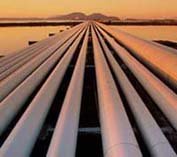
turning the flow of oil in the Odessa-Brody pipeline towards Europe. Gas supplies from Turkmenistan are sought, admittedly though in cooperation with the infamous RosUkrEnergo. Last year, plans were announced to build a pipeline from the Caspian to Poland. Another scheme is a pipeline from Iran - and then also a pipeline to the Baltic. Finally, only last week, Georgia Ukraine, Armenia and Moldova formed a regional "Organization for Democracy and Economic Development," where one of the main purposes is to: "activize efforts to ensure energy security, including by means of diversifying routes of transportation of energy resources from Central Asia and Caspian regions to the European market."
Are these actions of a country that does not try to assume its responsibility? Obviously, Kiev is trying to find alternatives to dependence on Russian energy, and by doing so attempts to rid itself of the full-fledged corruption within the Russia-Ukraine gas trade. Therefore, seeking alternatives is breaking with the past - as much in terms of dependence as corruption. This is a fact that Pascual should acknowledge, not least because Ukraine - and not the US - is running the risk of failure.
So, are the leaders of Ukraine lying, and thereby threatening their people and the sovereignty of the nation? Judging from the actions that Pascual proposes in comparison to what Kiev actually does, such a presumption is mere nonsense. There is little doubt that the government and a majority of Ukrainians would wholeheartedly subscribe to most of the measures Pascual proposes, if they only had the power to do so. Furthermore, Kiev is already working in this direction. Pascual simply cannot be ignorant of this. The question is how great a responsibility Ukraine should assume. Kiev is already out on a limb in trying to please US and EU interests in confrontation with Russia.
Bismarck said that "Politics is the art of the possible." Galbraith begged to differ by arguing that "Politics is not the art of the possible. It consists in choosing between the disastrous and the unpalatable." It is the latter type of choices Ukraine's leaders have been facing ever since the Orange Revolution. To belittle the difficulties of these choices is outright impudent. The West rightly assumes that democracies are stable. Seldom do we realise that democratisation is volatile. In the last two years, Ukraine has made giant leaps in democratisation. Its leaders must, however, be given the benefit of the doubt that they are able to avoid the pitfalls on the road to democracy. They are little served by being stabbed in the back for not reaching perfection at once. Instead of a reward for trying, Pascual scolds them.
Furthermore, when Pascual implies that the Ukrainian leadership is lying to the people, he is in blatant disrespect of the sovereign choice of the Ukrainian people. A majority has repeatedly voted for change. On March 26, the road to reform was reconfirmed in defiance of all the hardships it involves. The people steered off from an impending backlash, not necessarily because they believed in their leaders, but because they trusted this was the right way forward.
Politics in Ukraine is a sham since the elections, and the people is witnessing the daily charade of coalition negotiations to form a new government. Still, if the politicians
fail,

the people will hold them accountable for erring. It is a mutual relationship with few parallels in post-soviet space. The people has, once and for all, empowered itself, and will not accept that politicians make a mockery of its sacrifices for reform and democracy. Still, few believe in miracles and the understanding is growing that progress will take time. People are no fools. Their trust will be proportionate to the achievements. The people has had its choice, and has opted for further reforms with open eyes. This is a question of political direction - not political directors. To assume that the people is not competent to judge its leaders and to see through lies, when it has done so less than three months ago is a grave misperception.
Today, what people and politicians alike realise, is the basic political and economic paradigm of diversifying risks. This is not the time for pigheadedness in going full-out either way. There is a need for moderation, even if it may involve suboptimal solutions, for the simple reason that there is no power to reach the optimal. The alternatve for the people is failure, and nobody will be there to catch them if they fall, as demonstrated by the gas crisis.
Furthermore, when Pascual calls for state intervention in the energy sector, he ignores the importance of separating state from business - the lack of which has casused many of the problems from the outset. He thus disregards the delicate balance needed for gradually introducing necessary state regulation. On a wider European scale, Kiev needs all the backing it can get for the policy it is already pursuing. Substantially greater support is needed if anything more is to be done. Such support will most likely be lacking. Pascual himself states the obvious reason for this:
The United States hardly needs another crisis in the Russia relationship as we seek Russia's help in preventing a nuclear Iran. Russia needs neither an irate European customer nor a fight with diplomatic partners seeking to prevent an Iranian nuclear bomb.
Thereby, Pascual also fails to recognise the connection between Ukraine's domestic and foreign policy. For all the domestic measures that he proposes are in direct contradiction with Russia's core interests in using energy to exert influence over its "near abroad." A situation where Moscow directly or indirectly controls Ukraine's energy sector is decidedly in the best interest of the Kremlin. The greater extent of corruption, the less degree of cohesion will Ukraine's energy policy have. As long as such a situation is maintained, Russia gets both the power and the profits from Ukraine's gas dependence. Therefore, Moscow will most likely oppose any reforms or clensing of this sector. Taking heed to Russia's interests is simply incompatible with ensuring Ukraine's and Europe's gas supplies by supporting Ukraine. This should not conceal the fact that "the EU and the US should engage Ukraine and Russia before the crisis erupts and offer to facilitate negotitation of normal commercial arrangements." Here, Pascual is completely right.
All the same, it appears that the US cannot have it both ways: Urging Ukraine forward and at the same time serving Russian interests. If the Bush administration would seriously consider Pascuals proposals, Washington may have to "walk the walk and talk the talk," and that means directly confronting Russian interests. The other way around would, to the contrary, satisfy Moscow in the short run, but also potentially paralyze progress in safeguarding Ukraine's and Europe's gas supplies in the long run. There is, however, a middle way: Trusting the sound judgement of Ukraine's leaders, that they are competent to handle the issue themselves on a regional level, and with due support from the West. This would mean the continued long-term diversification of energy supplies that Ukraine and neighbouring countries have initiated, in combination with short-term EU and US arbitration between Kiev and Moscow. By lengthy engagement, US and EU companies may also get a stake in the profits by construction of pipelines and energy production. However, trusting Ukraine's leaders is obviously the last thing Pascual would do. What he does is to urge them to pull forward in response to the dangers to their own "sovereignty and European energy security." At the same time, he apparently refers to Ukraine when stating that "Russia needs neither an irate customer nor a fight with diplomatic partners seeking to prevent an Iranian nuclear bomb." By urging Kiev forward, Pascual however creates the latter - an irate customer in the guise of Ukraine.
One cannot but agree that most of Pascual's proposals would be desirable both for Ukraine and Europe at large - including Russia. The contradiction they carry in incompatible positions for, on the one hand Russia, and on the other hand Ukraine, Europe and the US, makes them an impossible road to tread. After three years in Kiev, one would expect Pascual to understand these basic complexities when Ukrainian domestic and foreign policies converge. This is though the most important factor that Pascual doesn't tell. By concealing complex but crucial factors, he would appear to badly serve the interests of both Ukraine and US foreign policy.
To be quite blunt, Pascual needs to cut the crap. He does not tell a lie, but he is surely twisting the facts, although he should know better. What is the real political motive for this? Does he have an issue with the leaders of Ukraine, the Bush administration, or the fact that Kiev does not wholly comply with any brainchild that Bush & consortes may conjure up? Prescribing a policy in two seemingly incompatible directions is not an answer. So, what is his motive. This, only Pascual can tell.

 On Monday, the Anna Lindh Memorial Fund announced that this year's human rights' awards both go to Belarus. Thus, Tatiana Ravyaka receives the 2006 Anna Lindh Prize and Alyaksandr Byalyatski the Per Anger Prize. Both prize winners represent the Belarusian Human Rights Center Viasna.
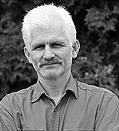 Byalyatski, the leader of Viasna, has for a decade supported human rights in Belarus by offering legal aid to the thousands of people that have been repressed by Lukashenka's regime. He is awarded the Per Anger Prize for his "brave struggle for the rights of the individual in the fight against oppression of human rights."
 Tatiana Revyaka, also of Viasna, receives the 2006 Anna Lindh Prize for her "committment, empathy and persistence in disclosing wrongs and supporting and advocating the oppressed. She courageously defies political oppression and spreads knowledge of an alternative society in which the rights of the individual are inviolable."