Thursday, May 25, 2006

Russian-Swedish Diplomatic Difficulties

Today, Swedish Radio reports on a rising diplomatic dispute between Russia and Sweden. Recently, a Swedish diplomat in Moscow and a Russian diplomat in Stockholm were declared persona non grata by their respective host countries. Who made the first move in this reciprocal affaire is still unclear, but it only serves to further deter diplomatic relations between Moscow and Stockholm.

In February, a Russian researcher at the Swedish University of Agricultural Sciences was arrested on espionage charges by the Swedish security police. This provoked stern reactions from Moscow, and Russian media claimed that the allegations were prefabricated. It was thus portrayed as simply yet another example of Sweden's increasingly Russophobic policy. Swedish media, on their part, reported that the Russian researcher had collected data on research and his fellow colleagues at the agricultural university for the Russian Embassy in Stockholm. The Russian researcher spent some time in police custody before facing spy charges. As his activities were not regarded as a rightout threat to Swedish state security, he was let off with expulsion from Sweden and the time spent in jail.

The Russian diplomat that has now been expelled from Sweden was the embassy contact man of the "spy scandal" researcher. A reasonable assumption would thus be that Sweden made the first move in PNG:ing a Russian diplomat. However, this is not self-evident as Stockholm has tried to put an end to the mutual expulsions of citizens and diplomats as well as spy allegations that have tarred Swedish-Russian relations in recent years.

However, if the Russian measure to expel a Swedish diplomat a few weeks back was a unilateral move, it would be somewhat out of the ordinary. Such a move would be in clear breach of diplomatic rules of reciprocity. Practice is that bilateral measures of this character are proportionate to each other. If so, the expulsion of an ordinary Russian citizen from Sweden recently, would then have resulted in a reply on the diplomatic level instead.

Also, Russia's rigid practice of strict reciprocity, regardless of whether there is just cause, only adds to further straining relations. A telling example of Russian expulsions is that the current head of the East European branch of the Swedish Ministry for Foreign Affairs is among Swedish diplomats previously declared PNG by Russia.

If Sweden this time made the first move, Russia's reply is, of course, simply business as usual in Moscow's diplomatic decorum. As is practice in such matters, little is said on the true circumstances surrounding an affaire like this. It must be noted however, that the number of Swedish citizens and diplomats expelled from Russia, seems to have been on the rise during recent years. The corresponding situation with expulsions of Russians from Sweden remains unclear, as Sweden often is much more discreet in these matters.

Another spy scandal arose six years ago, when two Swedish defence researchers were arrested for espionage by Russian authorities on a very weak pretext. The incidence was concurrent to a general Russian tendency of not granting visas to security researchers from the Nordic countries.

Also, Russia's increasingly disproportionate practice of reciprocity in expulsions has reached outside the realm of diplomacy. Thus, last autumn, Swedish State Television Moscow correspondent lost his accreditation in Russia with no explanation whatsoever, Kommersant reports. Rumours held it though that this was in response to not granting prolonged accreditation in Sweden to the correspondent of Russian newspaper Tribuna. The Swedish motive was that Tribuna's correspondent was paid not by his newspaper but by Gazprom, why he was no longer considered a journalist. The difference in status between a state television representative and a correspondent of a rather small newspaper is obvious, which only adds to the impression of disproportionate Russian countermeasures spreading from diplomacy to media and other areas.

That both countries have to put an end to this negative development is obvious. The alternative would be further deterioration of Russian-Swedish relations. Sweden has long been regarded by Moscow as one of Russia's greatest critics in the European Union. This should however not serve to conceal the fact that Stockholm's policy towards Russia has become increasingly conciliatory during the last few years. Thus, Stockholm now criticises Russia only in much severer cases of e.g. human rights' abuses than before. The difference is perhaps that there today is so much more to criticise in Russian behaviour. The threshold for critique has risen but so has also the number of severe cases. It thus seems that Russia and Sweden all the more are heading into a dead end in relations. It remains to be seen whether they will have the will and ability to turn developments around.

Thursday, May 18, 2006

Belarus: EU Freezes Lukashenko Assets

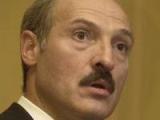
The European Union on Thursday decided to freeze the assets of president Alyaksandr Lukashenka and those of 35 other leading Belarus politicians, AFP reports. The measure is a reaction against suppression of the opposition during the March presidential elections.

According to the EU, all assets belonging to people responsible for breach of election rules and suppression of the democratic opposition will be affected. In April, the EU imposed travel restrictions for the same 35 people besides the president himself. Opposition allegations of election fraud have been met with stern reactions from the regime, including repeated police crackdowns on demonstrations. OSCE election observers found that the presidential election was severely marred by irregularities and outright fraud. On March 19, Lukashenka was reelected as president with an overwhelming 83 percent of the votes. The results only serve to strengthen the impression of dictactorial ambitions that have been a growing feature of Lukashenka's rule ever since his rise to power in 1994.

Ukraine: New Government Underway?

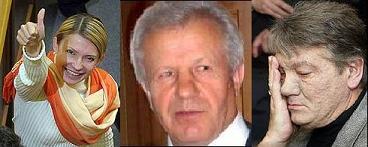
Ukraine may eventually get a new government this week. Seven weeks after the March 26 parliamentary elections, Timoshenko again declares that she stands as victor and new Prime Minister.

Thus, Timoshenko would reconquer the position she lost last year, by forming a coalition with Yushchenko's Our Ukraine, and Moroz' Socialist Party. In combination, the three parties control 243 out of the 450 seat in the Ukrainian Parliament, the Verkhovna Rada, as opposed to the 186 seat of Yanukovich's Party of Regions.

Whereas such a coalition seems more natural than e.g. an unlikely government between Timoshenko and Yanukovich or Yushchenko and Yanukovich, it would not be an easy path to tread. Rivalries between Timoshenko, Yushchenko, and Moroz have previously led to politicial crises in the aftermath of the Orange Revolution, and this may become a recurrent phenomenon also with a new orange government.

The road map that has led the way to, what could now become a new government, has created a common platform for political action between the three parties. Issues at stake are relations with Russia, WTO-membership, Ukraine's potential accession to Nato, as well as privatisations of state businesses and agriculture. Governemt talks have also been compared to reuniting a family after a lengthy and difficult divorce.

A wild card in negotiations is obviously also ramifications of the new constitution, which entered into force on January 1 this year. Limiting the powers of the president, parliamentary power increases, e.g. by the right to appoint Prime Minister.

According to the current coalition bid, Timoshenko's bloc will get half the ministerial posts, Our Ukraine a third, and the Socialists the remaining cabinet seats. It is also said that Moroz would become Parliament Speaker. How the actual division of the spoils will be in the end, however remains to be seen. Setbacks have been manifold up till now, so a repetition should not be ruled out, although the possibilities for renewed negotiations and solutions are quickly narrowing. According to the constitution, a government must be formed within 60 days of the elections. Today, 53 days have passed since 26 March, leaving a mere week to form a government. Time is simply running out, so the choice is to deal or die.

At the core, coalition talks reflect a struggle between mighty interests over profits from the Ukrainian economy. Despite the progress won by the Orange Revolution, corruption is still endemic to Ukrainian society and politics, and this also applies to the parties that now might form a new government. It is essentially a question of who will get the billions of dollars that end up in the pockets of private interests, not least from the transit of Russian gas to the EU - now controled by the RosUkrEnergo company.

As stakes are so high in getting a "fair" share of these proceeds, there is no wonder that the political struggle is so tough. Thus, forming a new government for these parties means to pay up or lose out on one's cut. To lose is not an option for either of the three parties, which perhaps is the main reason why a government eventually must form. The alternative would be to hand power and proceeds to Yanukovich, which definitely would leave the coalition partners with naught. Barring Yanukovich from power is thus what unites Timoshenko, Yushchenko, and Moroz.

However, there are still a few "buts" before a new government is in place. The greatest obstacle is still Yushchenko's opposition against accepting Timoshenko as Prime Minister. Thus, as news of a government deal became public on Monday, a spokesman of Our Ukraine was quick to declare that the party would suspend talks in response to Timoshenko's statement that she would become Prime Minister and Moroz Parliament Speaker. Instead, Our Ukraine launched an unexpected candidacy of the Socialist leader Moroz as Prime Minister. The rationale would be that parliament might not want to accept Timoshenko as Prime Minister, which then would severely complicate any further possibilities of reaching a common solution.

Our Ukraine's stern reaction was not unexpected. The party has repeatedly characterised Timoshenko's ambitions for the Premiership as an "ultimatum" in negotiations. Sooner or later, however, this is an argument that will not be taken seriously by anyone. The question now is, if the three potential partners have not reached a point of no return in negotiations. Having more or less struck a deal, Our Ukraine can no longer turn its back to agreeing on a solution. With almost two months since elections, the orange forces are reaching a decisive stage in negotiations when they must either unite or part. In the end, Yushchenko must most likely face realities and drink the bitter cup Timoshenko offers him, for the simple reason that he is running out of options. The alternative would be to part from power, if not from the presidency.

It is now becoming painstakingly clear that Yushchenko can no longer perform a play to the gallery, and must admit that he plays too high a game. Now it's do or die - neck or nothing, and Yushchenko must swallow his pride by accepting Timoshenko, while next week might be too late. It remains to see whether Yushchenko will rise to the challenge or extend his role as election loser to that of lame duck as president. It all lies in Yushchenko's hands and how he decides will seal his fate in the history of Ukraine. Time is running out for him to show that he believes in, knows how, and can make a change for his country.

Wednesday, May 17, 2006

Financial Times Special on Georgia

Financial Times deals with Georgia in its May 2006 World Report. It contains among others an interview with president Mikheil Saakashvili, and various pieces on essential political and economic issues. Great emphasis is thus put on reform versus corruption: "While liberal reforms and a drive against corruption have brought the former Soviet republic back from the brink, the country is still trying to fulfil its potential," FT writes. The full list of contents is:

Friday, May 12, 2006

Cheburashka Goes Japan

Cheburashka - a favourite animated figure from the soviet 1970's is about to have his comeback on the filmscreen. "After stealing hearts at the Turin Winter Olympics, the famed Soviet cartoon charater is about to become a movie star in Japan," Moscow Times reports on Friday. The question now is whether the heritage of a cult character like Cheburashka may be preserved in a contemporary version by a non-Russian moviemaker.

For the generation brought up during the 1970's, Cheburashka and his accordion-playing companion Krokodil Gena, represent reminiscences of a happy childhood. The story of the small and unknown tropical animal - Cheburashka - that by chance is carried off from the jungle to Moscow in a crate of oranges, and his friendship with the lonely and not always so wise Gena, has fascinated generations of children. As any good adventure, there is an enemy as well - in the form of the mischievous but rather harmless Starukha Shapoklyak.

Cheburashka first saw daylight in the 1966 childrens' novel "Crocodile Gena and His Friends" by Eduard Uspensky. As Cherburashka now turns 40, he is about to have his comeback as a major moviestar - this time in Japan. In 2001, the old Soyuzmultfilm cartoons, produced from 1969 up till the 1980's, were shown in Japan, attracting great popularity. However, Cheburashka's real breakthrough came in connection with the Turin 2006 Winter Olympics, where he acted as mascot - though in white winter fur - for the Russian team.

Now a major Japanese film company has purchased the screen rights of Cheburashka to make it into a major motion picture. So now Cheburashka fans worldwide will live in great anticipation until the new Cheburaska is launched in a year or so from now. Still, one wonders if the Japanese will be able to live up to expectations among those who still have the soviet original cartoons as a point of reference - not to speak of the anecdotes. Images of cult phenomena like Cheburashka are not easily altered without public outrage. Only a couple of years ago, a new translation of Karlson na kryshe aroused massive protests in Russia. It remains to be seen how well the Japanese succeed in conveying that special character that so many associate with Cheburashka - a soviet childhood hero.