Saturday, April 22, 2006

Belarus: Exile Poll Exposes Election Hoax

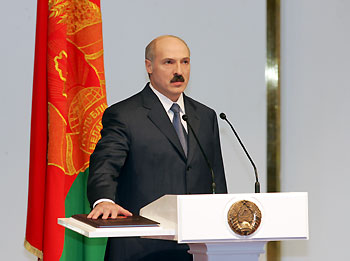
An independent survey by the Vilnius-based institute NISEPI, exposes that Lukashenka's "victory" in the 19 March Belarus presidential elections may have been exaggerated by some 20%, RFE/RL reports on Friday.

According to the figures given by the Belarus Central Election Commission on March 20, some 83% of votes had been in favour of the incumbent president Lukashenka. Indeed, hardly had polling stations closed on Sunday 19 March before the Commission chairman proclaimed Lukashenka's victory. Few think that the real figures ever will be exposed and irregularities have probably already made all results indecipherable.

Therefore, as Vilnius-based Independent Institute of Socioeconomic and Political Studies (NISEPI) earlier this week publicized a survey among nearly 1,500 adult Belarusians from March 27 to April 6, an alternative perspective was given. According to these figures, Lukashenka would have received some 63.6% of votes among those involved in the survey. Thus, it seems that Lukashenka's victory of 83% was inflated by almost 20% of the electorate.

Also, the poll indicates that the opposition presidential candidate, Alyaksandr Milinkevich, may have been deprived of nearly a million votes, while he received nearly 21% of votes in the poll as compared to the 6% of the official results. As much as this would give the opposition much stronger public support than expected, NISEPI Director Aleh Manayeu is fast to point out that this should not be equated with a strong opposition movement. Votes are votes and the public display of it by political action is another thing.

NISEPI, which conducted the survey, was closed down by the Supreme Court of Belarus in April 2005, having made a survey that disqualified the results of the October 2004 constitutional referendum, suggesting that Lukashenka actually lost it. Since then, the institute has relocated to Lithuanian capital Vilnius, which today forms a centre of the emigré Belarus research community.
Aeroflot Renationalises Russian Airlines?

Russian Ministry of Transport on Friday aired its ambition to gather all state-owned stocks in Russia's various national and regional airline companies under the umbrella of Aeroflot, Reuters reports. Such measure would effectively mean renationalising the bulk of Russia's airlines, as the state still is the majority shareholder in Aeroflot.

The statement made the Aeroflot share soar upwards by 8% on the Moscow stock exchange during Friday's trade alone. If implementing these plans, Aeroflot would gain a majority control over the Russian airline market, which today is split up in a variety of national and regional airlines. Aeroflot would thus get next to a monopoly position on the Russian airline market, making all other companies in the trade dependent on its infrastructure and vulnerable to buyouts, boycots, illoyal competition, or whatever the reborn Aeroflot hegemon might come up with. The Russian state today owns stocks in 61 various airlines and is majority shareholder in an additional 57 regional airlines. By transferring all these shares to Aeroflot, state ownership of the company would also be strengthened to a staggering 75% of shares.

The plans of the Ministry of transport are in line with president Putin's overall strategy to control or renationalise vital resources, commodities and assets, reinstating the state as a key-player in the Russian economy. The control of infrastructure such as airlines, pipelines, or natural monopolies, has been a long-held ambition of Putin for the enrichment and power of the state and its controllers - Russia's new Putinist élite.

Thursday, April 20, 2006

Ukraine After the Parliamentary Elections

Today, Hryhoriy Nemyria, director of the Centre for European and International Studies and newly elected member of the Ukrainian parliament (BYuT), lectured on developments after the country's recent parliamentary elections at the Swedish Institute of International Affairs. Nemyria, who is more of a researcher than a politician, is participating in a security policy research project organised by the Swedish Defence Research Agency and financed by the Swedish Ministry for Foreign Affairs.

In his lecture, Nemyria - among other things - pointed to three factors that I found of particular interest:
  • the 3% threshold to parliament;
  • that only 5 parties, out of a total of 45 running, actually entered parliament;
  • Only 67% of the electorate voted as compared to 76% in the last elections.

I have previously pointed to the fact that more than 20% of votes in the election will not result in any parliamentary representation due to the 3% threshold and the many parties running for parliament. I had, however, until now not taken the voter turnout into account. All in all, this would mean that less than half the Ukrainian electorate will be represented in parliament. This is perhaps not unique to Eastern Europe, but taking the recent orange revolution and its subsequent urge for reform into account, this may be more serious than might be expected.

Asking Dr. Nemyria to what extent this might pose a problem of democratic legitimacy to the parliament and a new government, he admitted that this was problematic. In the long run, it may either result in political lethargy or in pushing people to the extremes in terms of political choice. Expectations for a "third force" or some new political movement may easily rise. However, Nemyria continued, the matter should also be perceived from a vertical perspective, viz. in terms of what politicians may deliver to the people. This is the more serious problem, as links between politicians and people are weak - both top-down and bottom-up. Furthermore, one may ask whether people experience that what they get is a result of government policy or a consequence of connections with or bribes to officials or politicians on various levels of society. So far, most people have got little out of government policy.

The conclusion one might draw from Nemyria's reasoning might thus be that, as long as people do not see the causal link between what the government does and what they actually get, the problem of legitimacy is much greater on the vertical level than concerning how large a percentage of the electorate is represented in parliament. The combination of the two factors should, in my view, form a political nightmare if Ukraine - under these terms - is to continue its path towards reforms and change. Keeping to status quo needs little legitimacy. Changing a country needs a strong mandate. It would seem that whatever government Ukraine will get in the next years, it will have a weak mandate and no real way of showing the casual link between its policy implementation and the actual results - in terms of better conditions for the people. As long as this is the case, progress may be claimed by next to everyone, and failure will be blamed on the government. One can hardly envy the cabinet that will run Ukraine in the coming years.

Wednesday, April 19, 2006

Russia: NGO Crackdown on Soldiers' Mothers

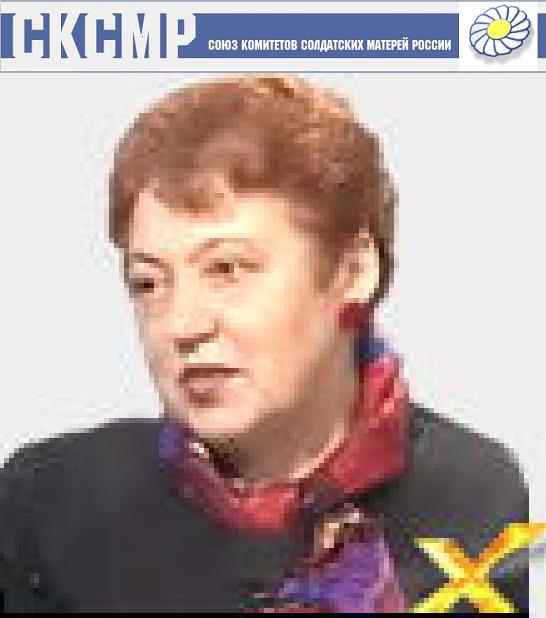
On Monday, Russia's new and immensely infamous NGO-legislation, curtailing civic activities, entered into force. On Wednesday, one of Russia's most prominent NGO's, Union of the Committees of Soldiers’ Mothers of Russia, received a court order to dissolve the organisation, Swedish Radio reports. This immediate measure by Russian authorities signals that Putin is intent on continuing his policy to eradicate any dissenting political forces and curtailing the freedom of organisation in Russia.

The court order was issued by the Basmanny Court on request of the Federal Registration Office of the Russian Ministry of Justice, Soldiers' Mothers head, Valentina Melnikova, explained. The Basmanny Court has earned a reputation for being used as a legal proxy by the Kremlin to make the life of rival political forces hard. The court has gone to such lengths at servicing its political masters that Russians today use the expression "Basmanny justice" instead of miscarriage of justice. Its first great appearance on the legalo-political stage was the elimination of Mikhail Khodorkovsky as a potential political rival to Putin in the so called Yukos scandal a few years back.

The Soldiers' Mothers have earned domestic and international fame for its efforts to fight for the interests of Russian soldiers, who often live under unbearable conditions during military service. The organisation gained its great reputation as an outspoken and serious critic of human rights' abuses in the Russian army during the first war in Chechnya from 1994. They were thus one of the main levers that made the Russian public turn against the war. Since then, it has continued to clamp down on penalism and bad conditions for servicemen in the Russian army. Its Secretary General, the well-known human rigths' fighter Valentina Melnikova, will now contend the decision by an appeal to the Basmanny court.

That the Kremlin has chosen the Soldiers' Mothers as its first victim in its crackown on Russian NGO's, may signal the start of a campaign to crush any real political freedom and civil liberties in Russia. During recent years, the Russian government has created state-directed quasi-NGO's and political fora to channel public interest. It is obvious that these structures are regarded as the main fora for political dialogue by the Kremlin. Other forms of political and civic activities will be allowed to continue activities only as long as they do not threaten the interests of the Kremlin, and then under strict control and supervision.

The action also testifies to the mania of Russia's political élite to lose control and be overthrown by the people as happened in Ukraine's orange revolution. The paradox is that the more repressive and authoritarian Putin gets, the more likely it is that public dissent will blow up in his own face. By concentrating power to his own hands, there will in the end be nobody else to blame for political crises or failures, and then the people will inevitably turn against Putin. This is really to shoot oneself in the foot, but few in the Kremlin seem to realise this.

Saturday, April 08, 2006

Russian Triumph in the New Great Game

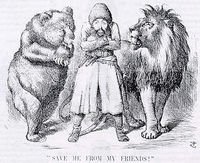
Russia has gained a triumph in what has been referred to as the New Great Game in the great power struggle over energy resources in the Caucasus and Central Asia, Eurasianet reports. During his recent visit in Moscow, Kazakhstan's president Nazarbayev promised to increase oil exports via Russia, thus threatening future supplies to the western-sponsored BTC-pipeline.

In June 2005, the new oil pipeline Baku-Tblisi-Ceyhan was officially opened. At the mind-boggling cost of $3.6 billion, the new pipeline was seen as the "deal of the century", providing a vital link between the Caspian Sea oil fields and the rest of the world by way of Georgia, Azerbaijan and Turkey. This was to become the "Silk Road of the 21st Century", according to Turkey's president Sezer. Above all, the BTC-pipeline allowed western oil companies to circumvent dependence on Russian pipelines to transport oil from the Caspian Sea basin. This was a great blow to Russian economic interests in the region and presented a geopolitical threat to Moscow's position in Southern Caucasus and Central Asia.

Why is this new deal with Kazakhstan president Nazarbayev such a triump for Moscow? By increasing oil exports to Russia, Kazakhstan diverts oil production that could potentially be transported through the BTC-pipeline.

The BTC-consortium has for long been trying to involve Kazakhstan in channeling the country's oil production by the BTC-pipeline. This has been BTC's calculation from the outset, and therefore Nazarbayev's decision now threatens the long-term economic viability of the BTC. Over the last years, critics have been questioning whether the BTC-project, based on inflated oil-prices, would be financially sustainable in the long run. It now remains to see, how this will effect the BTC.

From a wider perspective, Russia has gained an important success in the geopolitical and economic struggle over Central Asia. For western powers and economic interests in the region, the future prospects of influence and business has now turned somewhat more bleak than a year back, when the BTC held the promises to open up Central Asia's reources to the world. Whether Moscow will use its regained influence to make money or as a political lever on an oil-dependent West, will have great consequences for the future of Eurasia and, potentially, the world economy.