Friday, April 07, 2006

Russia: Defence Spending Up 50%

On April 5, Russian Defence Minister Sergey Ivanov declared that defence spending will increase by 50% in 2006, Interfax-AVN reports. The increase is dedicated to massive arms and hardware procurements, raising the qualitative standard of Russian forces.

The focus is to provide troops with full sets of equipment for multi-purpose action, Ivanov reportedly said to a Moscow military conference on Wednesday. Accordingly, these newly equipped units would be able to solve tasks set before them in a manner without precedence since the fall of the Soviet Union.

Consequently, Russia's armed forces seem to be in for a revival worthy of its material and spiritual heritage. One cannot but pause to wonder what equipment will be developed to face those challenges that lie ahead in defence of Mother Russia. Finally, which are the challenges - traditional or new?

Thursday, April 06, 2006

Russia Bans Georgian & Moldovan Wines

Russia has imposed a blockade on imports of wines from former soviet republics of Georgia and Moldova, New York Times reports in its Thursday issue. Russian authorities claim that the ban is due to high concentrations of heavy metals and pesticides in the wines, but there is little doubt that this blockade is politically motivated.

The story, brought to my attention by Caucasus analyst Svante Cornell, puts the finger on a number of delicate issues pertaining to Russia's policy towards its "near abroad".

Russia has had great difficulties to come to terms with its waning influence in its "soft underbelly". Setbacks have been many in the last few years, not least by the coloured revolutions in Georgia and Ukraine.

Georgia's government under Mikheil Saakashvili has pursued a much more independent policy than was the case in the 1990's, to Moscow's great annoyance. Demands for a withdrawal of Russian troops from Georgian territory, and some Georgian success in bringing Russia-supported secessionist regions back in line threaten to curve Russian influence in a region it traditionally sees as its "sphere of vital interests".

In Moldova, president Vladimir Voronin has also been negative to Russian influence and the stalemate Moscow has put on the matter of the secessionist Transnistria region. Due not least to Ukrainian and EU efforts over the past year, the smuggling that sustains Transnistria, has been put in relative cheque. The combination of a more critical Moldovan stance towards Russia with reduced possibilities of Transnistria sustaining itself by trafficking, has brought about today's hostile relationship between Moscow and Chisinau.

Consequently, nobody really believes in Moscow's explanation of unhealthy contents in Georgian and Moldovan wines as the real reason for Russia's wine ban. Instead, the ban obviously intends to put pressure on the two states' economies, which both rely heavily on wine production for export revenues.

Also, Russian measures put Moscow's will to integrate in the world economy as well as the country's dedication to free trade in question. This should be embarrasing to the "masters of the Kremlin" at a time when Russia holds the presidency of the G 8 - the prestigious group of industrialised nations to which Russia gained access just a few years back. Furthermore, if worse comes to worst, Russia's wine ban might impair the country's long-standing ambition to join the World Trade Organization.

Ukraine: Orange Government Coalition

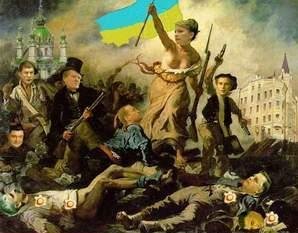
Unity has been reached on an orange coalition government in Ukraine between president Viktor Yushchenko's Our Ukraine, the Timoshenko Bloc, and the Socialist Party, a spokesman of Our Ukraine stated to Reuters on Thursday.

As of now, the composition of the government is not ready, but it is likely to assume that Yulia Timoshenko and Socialist leader Oleksandr Moroz will occupy leading posts in the new government.

Thereby, the winner of the parliamentary elections, Party of Regions' Viktor Yanukovich is sidestepped once more. Yanukovich, whose party received some 32% of votes making it the biggest in parliament, was ousted as president after widespread election fraud in 2004. Since then, his popularity has, however, grown due to recurrent failures of the various governments evolving from the orange revolution.

The formation of an orange government coalition will mean a continued European orientation for Ukraine, although such a solution also presents some problems for Ukrainian politics. (See my previous post for analysis in depth). Talks will now be held between the three parties to agree on an action plan for coalition government, BBC reports.

It remains to be seen whether Yulia Timoshenko's chief demand, to become prime minister of the new cabinet, will be met. Last September, Timoshenko was sacked as prime minister by president Yushchenko due to a mutual fallout. Therefore, a return as head of government would be both a political and a personal triumph for Timoshenko. It might also further undermine Yushchenko's position, in addition to his party's setback in the recent parliamentary elections.

Sunday, April 02, 2006

Belarus: April's Fool

Did you hear the rumour yesterday? It was claimed that Lukashenka's wife Galina Rodionovna, had sought political asylum at an EU embassy in the capital of a neighbouring country to Belarus. Rumours resulted in intense diplomatic activity to find out more about this delicate issue. Someone suddenly realised it was April 1 - the traditional day for deceptive jokes.

The art of playing April's fool is to make up a story that is credible enough as to be believed but too fantastic to be true, and then fool people into taking it for serious. This time, the joke was really as good as it gets.

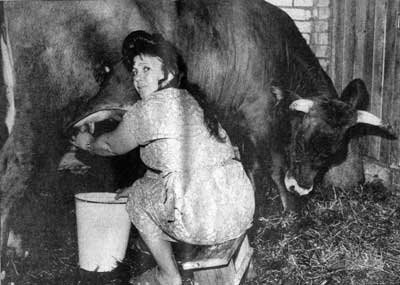
Lukashenka's wife, Galina Rodionovna, has for long been out of public view in Belarus. She still lives in the rural town of Shklov, where Lukashenka once led a collective farm. Officially, she is regularly commuting to her husband in Minsk, but among others the BBC claims that the couple is separated. The picture above is, actually, the only one to be found of her on the Internet (Google & Yandex).

That the couple's awkward relationship is subject to public ridicule is also testified by another recent event. On March 8, three oppositionists were arrested in Minsk for distributing leaflets asking people to present Lukashenka's wife with an International Women's Day gift by not voting for her husband during the presidential election to enable him to return home to her, the International League for Human Rights reports.

All this would, in itself, perhaps not have been enough to fool anyone, if it were not for the fact that Lukashenko has not been seen in public for a few weeks. Speculations that he is ill have flourished. Too much makeup at his public appearances when he was last seen and irregular and contradictory decisions during his absence are but a few indications of that something more than usual is rotten in the state of Belarus, according to some observers. It is even claimed that Lukasehenka's son Viktor has stepped in for his father lately.

Consequently, western diplomats, following events in Belarus, were probably not hard to fool when rumours started to spread that Galina Rodionovna had applied for political asylum. One cannot help wondering, until the scam was uncovered, how many reports were drafted proclaiming Lukashenka's imminent fall, when even his family could not put up with him anymore.

Speaking about dictators, with 82.6% of votes in the recent presidential elections a classic joke on dictatorship elections is now applicable to Lukashenka. Accordingly, Lukashenka's associates inform him on the victorious election results by asking:
- Mr. President, you got 82,6% of the votes. What more can you wish for?
- The names and addresses of those who didn't vote for me.
Regretfully for the people of Belarus, this is not so far from reality as one would wish. In Minsk, nobody has probably dared making Lukashenka an April's fool.

Saturday, April 01, 2006

American New Rosneft CFO

Russian state oil company Rosneft is recruiting American Peter O'Brien as Chief Financial Officer, RIA Novosti reports. He is currently working with Eastern Europe for the American investment bank Morgan-Stanley, and has had close business contacts with Rosneft over the last years.

Rosneft got a bad reputation due to its role in the Yukos affairs a few years back and has since tried to improve its image. Among measures for greater transparency and market orientation, the company has announced plans to float share on both domestic and international markets. According to Russian Minister of Economic Development and Trade German Gref, this might happen no later than October. As of late, rumours of a merger with Siberian energy company Surgutneftegas have been fuelled also by Energy Minister Minister Viktor Khristenko. It remains to be seen how long O'Brien will hold out in his new position and whether mergers or more stocks to international investors will help Rosneft's reputation.